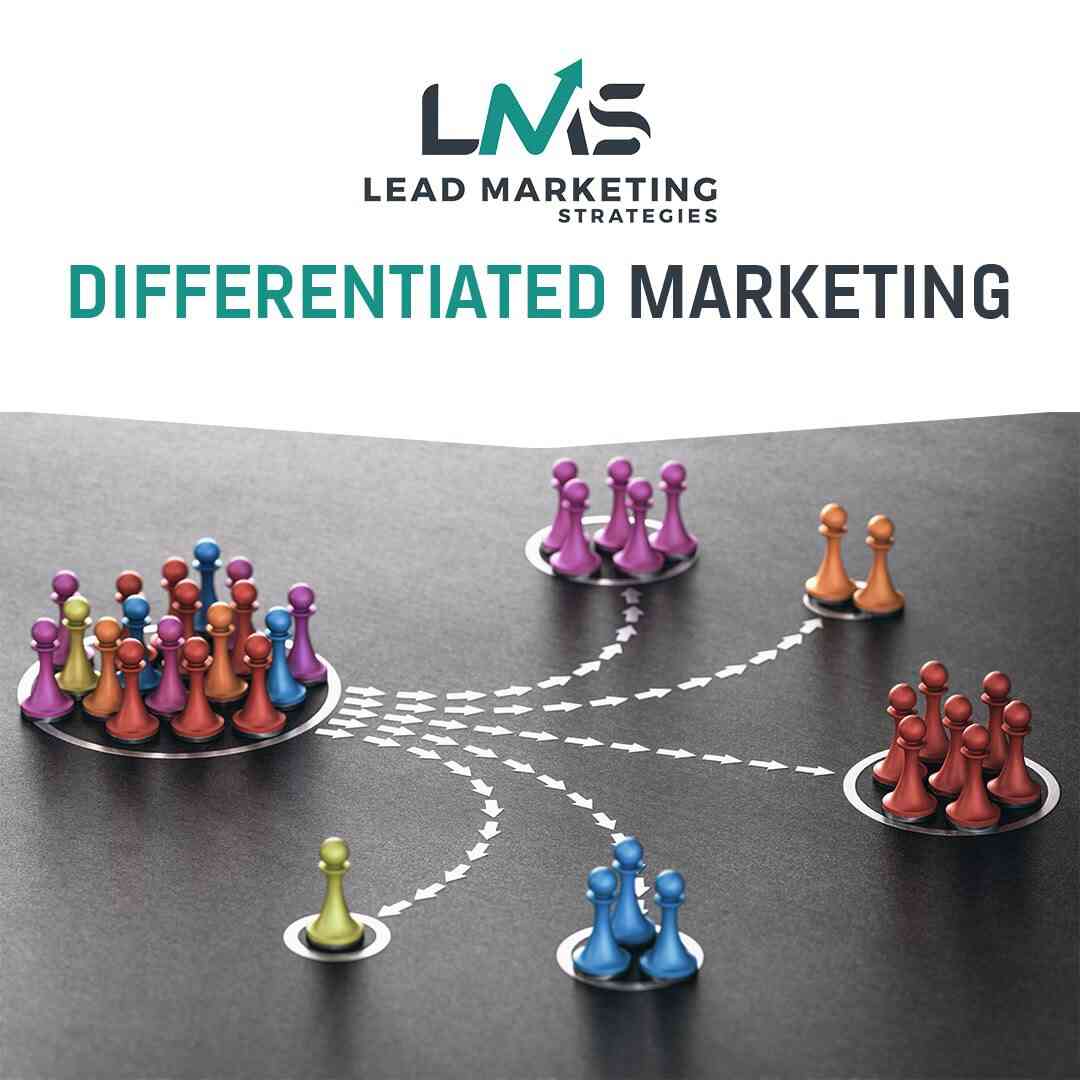


Differentiated marketing is a strategy where a business creates separate offers, messages, or campaigns for different customer segments instead of using one message for everyone. By tailoring what you say and sell to each group, you make your marketing more relevant, which increases engagement, sales, and loyalty. It is also called multisegment marketing.
What Is Differentiated Marketing?
Differentiated marketing means tailoring your marketing to specific segments of your target market rather than treating everyone the same. Instead of a single one size fits all campaign, you identify different groups of customers with different needs, then build customized messages, products, or promotions for each one.
The idea is simple: a message built for a specific group lands harder than a generic message built for no one in particular. A clothing brand, for example, might speak to young professionals, teenagers, and retirees in three different ways, each with its own tone, channel, and offer. That relevance is what drives stronger engagement and more sales.
What Is a Differentiated Marketing Strategy?
A differentiated marketing strategy is the plan for putting this approach into action. It involves segmenting your audience, then creating distinct messages, products, or services for each segment based on their specific needs and preferences. You can differentiate across several levers:
- Messaging: different words, tone, and value propositions for each group.
- Channels: reaching one segment on social media and another through email or search.
- Promotions: offers and discounts matched to what each group cares about.
- Pricing: adjusting price or packaging for different segments where it makes sense.
This approach works for both product and service based businesses, and it applies in both B2C and B2B markets.
What Are the Advantages and Disadvantages of Differentiated Marketing?
Like any strategy, differentiated marketing has real strengths and real tradeoffs. It helps to weigh both before you commit.
Advantages:
Want Professional Social Media Management?
Our team can help you put these strategies to work. Get a free consultation.
- Increased effectiveness, because relevant messages engage people and convert better.
- Stronger customer loyalty, since addressing specific needs builds a deeper connection.
- A competitive advantage, through unique selling points competitors do not offer.
- Better use of resources, by focusing budget on the segments most likely to respond.
Disadvantages:
- More complexity, because segmenting and building separate campaigns takes planning and time.
- Higher cost, since several tailored campaigns cost more than one broad one.
- Risk of spreading too thin, if you chase too many segments at once instead of focusing.
For most small and midsize businesses, the sweet spot is two or three segments you already serve well, not a dozen.
What Is the Difference Between Differentiated and Undifferentiated Marketing?
These are two opposite approaches to reaching a market, and the right choice depends on your product, your audience, and your goals.
- Undifferentiated marketing, also called mass marketing, uses a single campaign to appeal to the entire market. It assumes everyone wants roughly the same thing. It is simpler and cheaper, and it fits everyday necessities like basic food or household staples, but it can feel generic and miss the needs of specific groups.
- Differentiated marketing uses multiple campaigns tailored to separate segments. It assumes the market is made up of distinct groups with distinct needs. It is more precise and usually more effective, but it costs more and takes more effort to run.
Undifferentiated marketing casts the widest net with one message. Differentiated marketing trades simplicity for relevance.
What Is Another Name for Differentiated Marketing?
Differentiated marketing is also known as multisegment marketing. The name describes exactly what it does: it markets to multiple segments of a target audience at the same time, with a customized approach for each. Businesses typically segment their market using criteria such as demographics, buying behavior, psychographics, and geographic location, then build a campaign for each priority segment.
What Are Examples of Differentiated Marketing?
Differentiated marketing shows up in tactics you probably see every day. Here are clear examples:
- Personalized email campaigns: segmenting an email list by demographics, behavior, and purchase history, then sending each group a message built for them.
- Tailored product offerings: a skincare brand promoting its sensitive skin line to customers who have reported sensitive skin, and a different line to everyone else.
- Location based advertising: an outdoor equipment company running ads that highlight the popular outdoor activities in each specific area it serves.
- Segment based pricing: a watch retailer offering student and senior discounts to make the product more accessible to those groups.
- Customized loyalty programs: a clothing brand running one rewards program for repeat buyers and a separate welcome offer for first time customers.
A simple real world version: a local contractor who splits his ads between homeowners and property managers. Same service, different words for each group, and very different results.
What Are the Benefits of Differentiated Marketing?
When it is done well, differentiated marketing pays off in a few consistent ways. It increases effectiveness, because campaigns built for specific groups earn more attention and action. It builds loyalty and retention, because customers feel understood when you speak directly to their needs. And it creates a competitive advantage, because tailored positioning helps you stand out in a crowded market where most competitors send one generic message. Our team uses a full range of digital marketing services, from SEO and PPC to social media and email, to help businesses reach each of their segments in the right place with the right message.
How Do You Build a Differentiated Marketing Strategy?
Start with research and segmentation. Study your customers and group them by what actually makes them different, whether that is demographics, needs, buying behavior, or location. Pick the two or three segments that matter most to your business. Then build a message and offer for each one, choose the channels where each group pays attention, and measure the results so you can refine over time.
We have watched local businesses try to speak to everyone and end up reaching no one. What works better is picking a few groups you already serve well and writing a separate message for each. If you want help segmenting your audience and building campaigns that connect, our email marketing services are a practical place to start, and we offer a free consultation to map out the plan.
Related guides: What Is Tactical Marketing?, What Is Vertical Marketing?, and What Is Attraction Marketing?.
Let Us Help You Implement These Strategies
Stop struggling alone. Our expert team has helped hundreds of businesses achieve their marketing goals. Get your free consultation today.